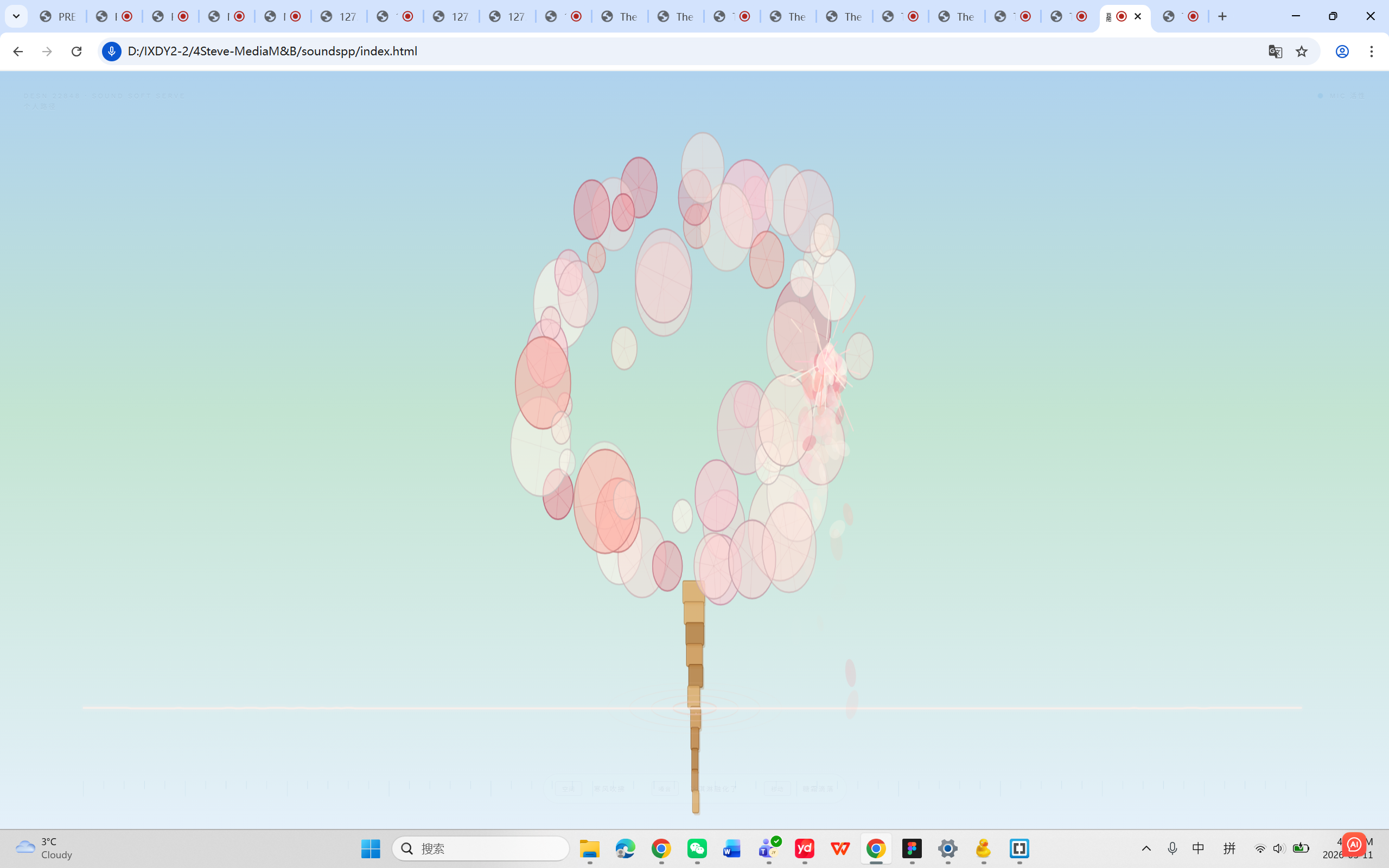
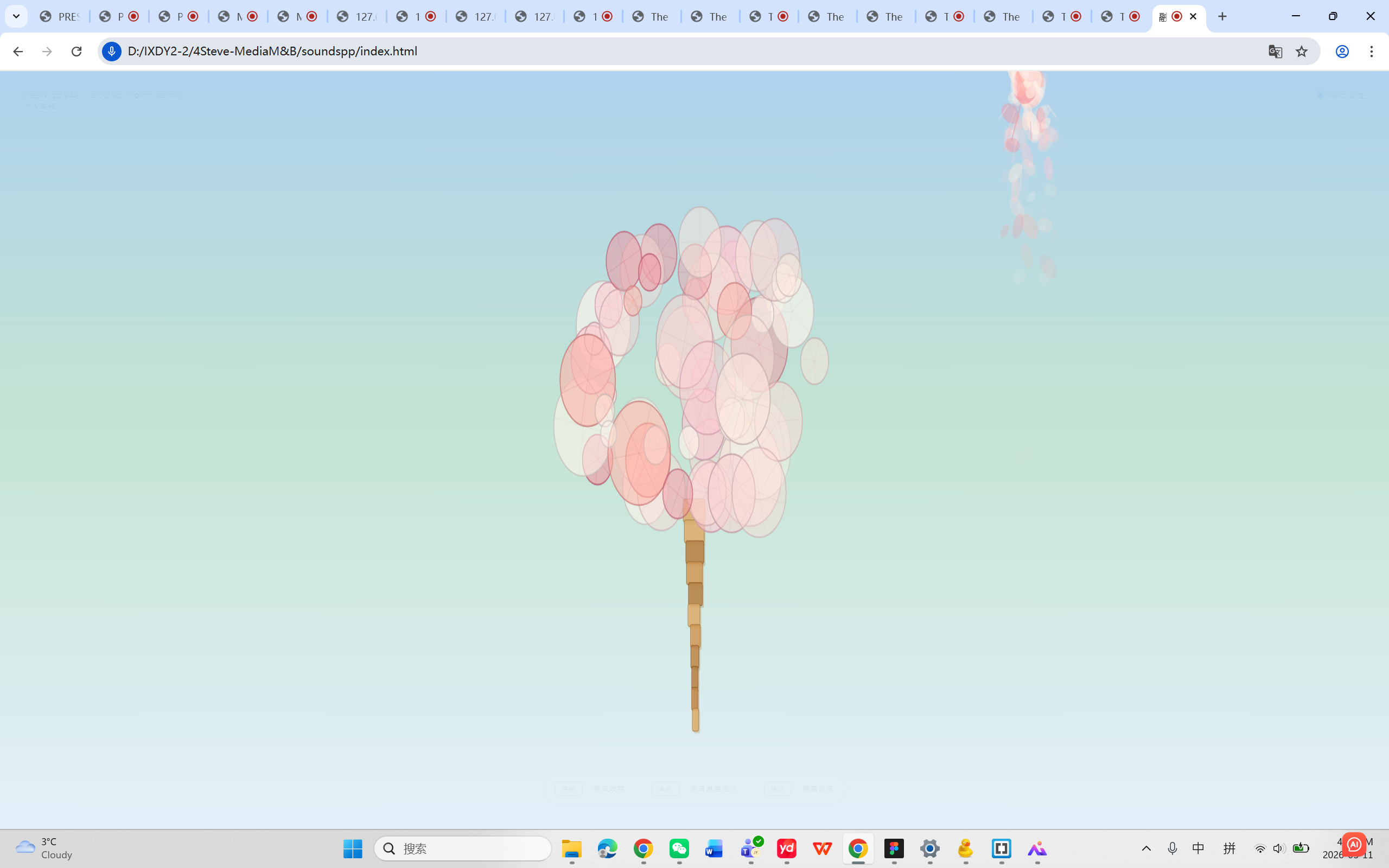
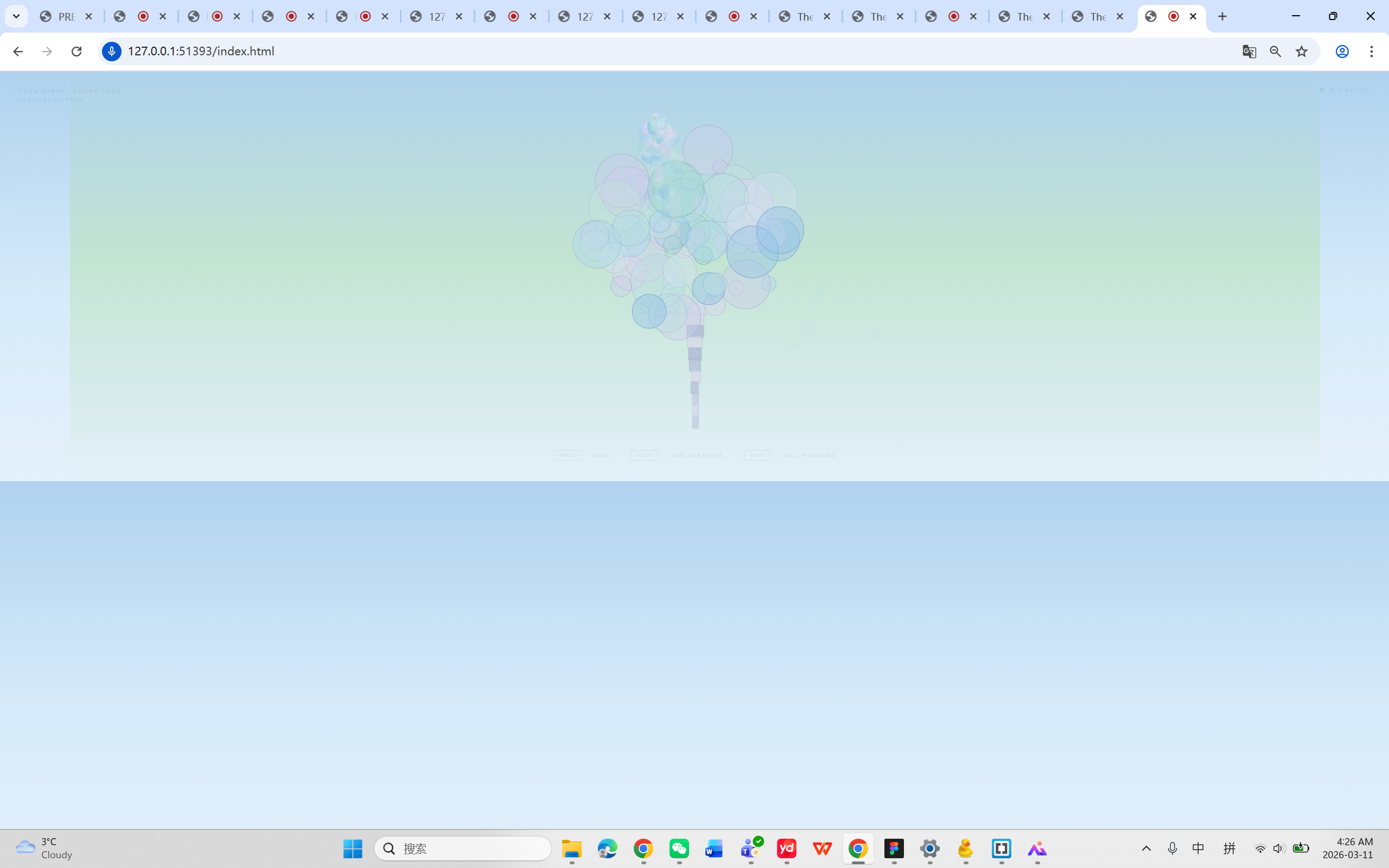
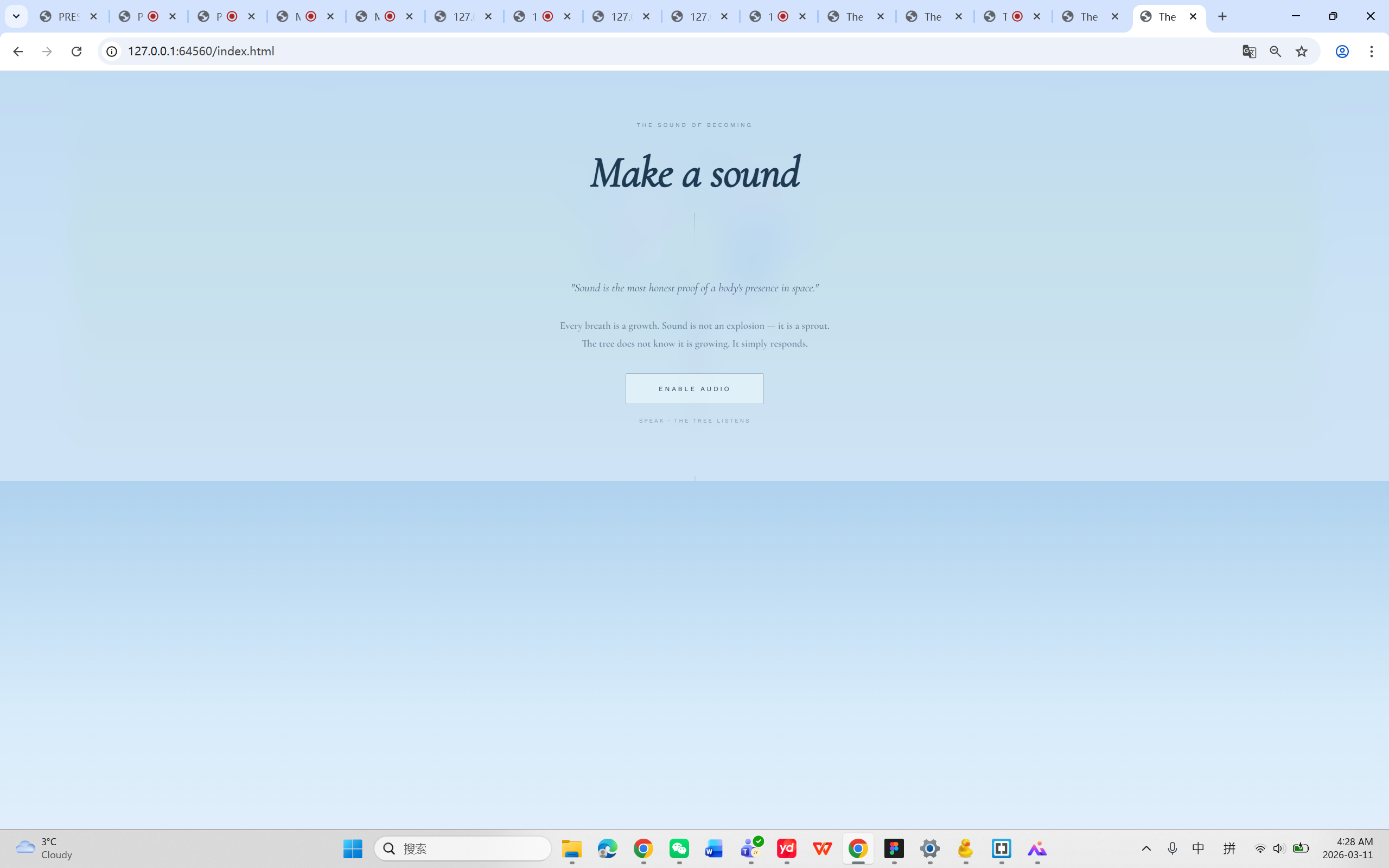
Three sound experiments · Choose yours
Design Statement
Sound as a Physical Force — The Sound of Melting
Sound as a Physical Force — The Sound of Melting
Sound is only rarely treated as a design material with the same
precision that colour or form commands — and yet it is, in every
meaningful sense, just as spatial, just as embodied, and just as
capable of shaping behaviour. The Sound of Melting begins
from this conviction: that the microphone, which designers have
long positioned as a recording instrument, is better understood
as a force transducer — something that converts vocal energy into
a vector capable of pushing matter across a screen.
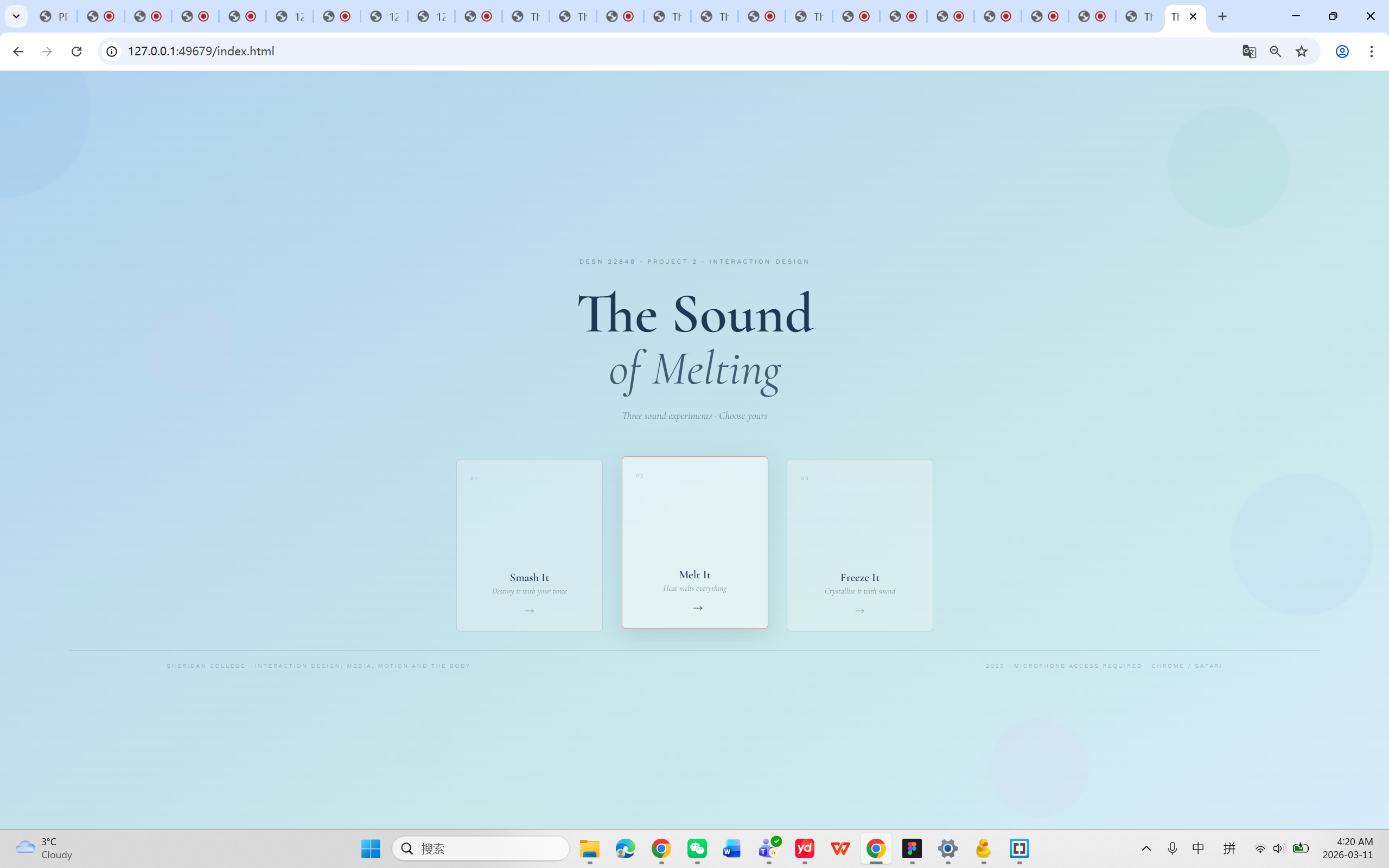
The project offers three distinct interaction modes, each of which
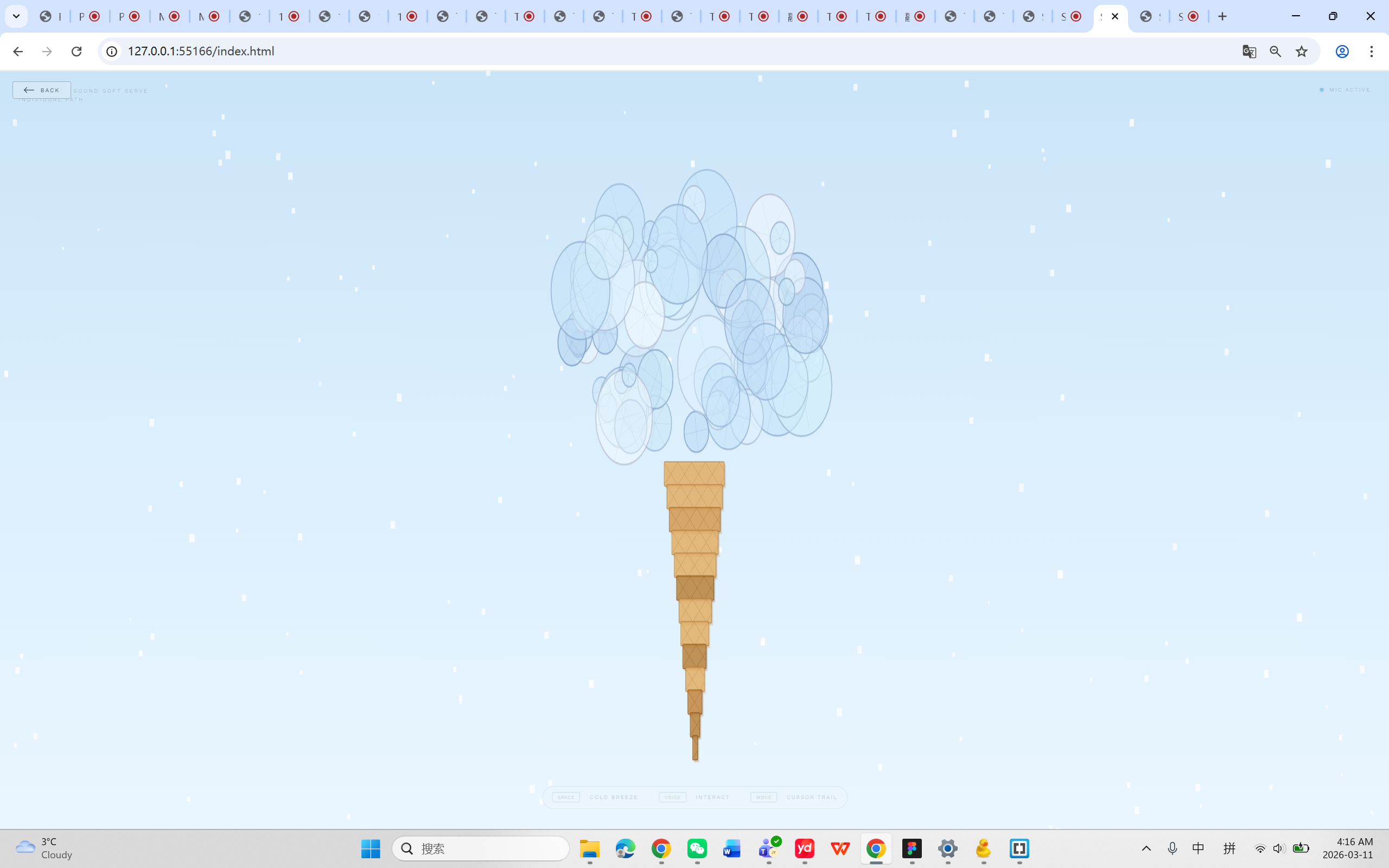
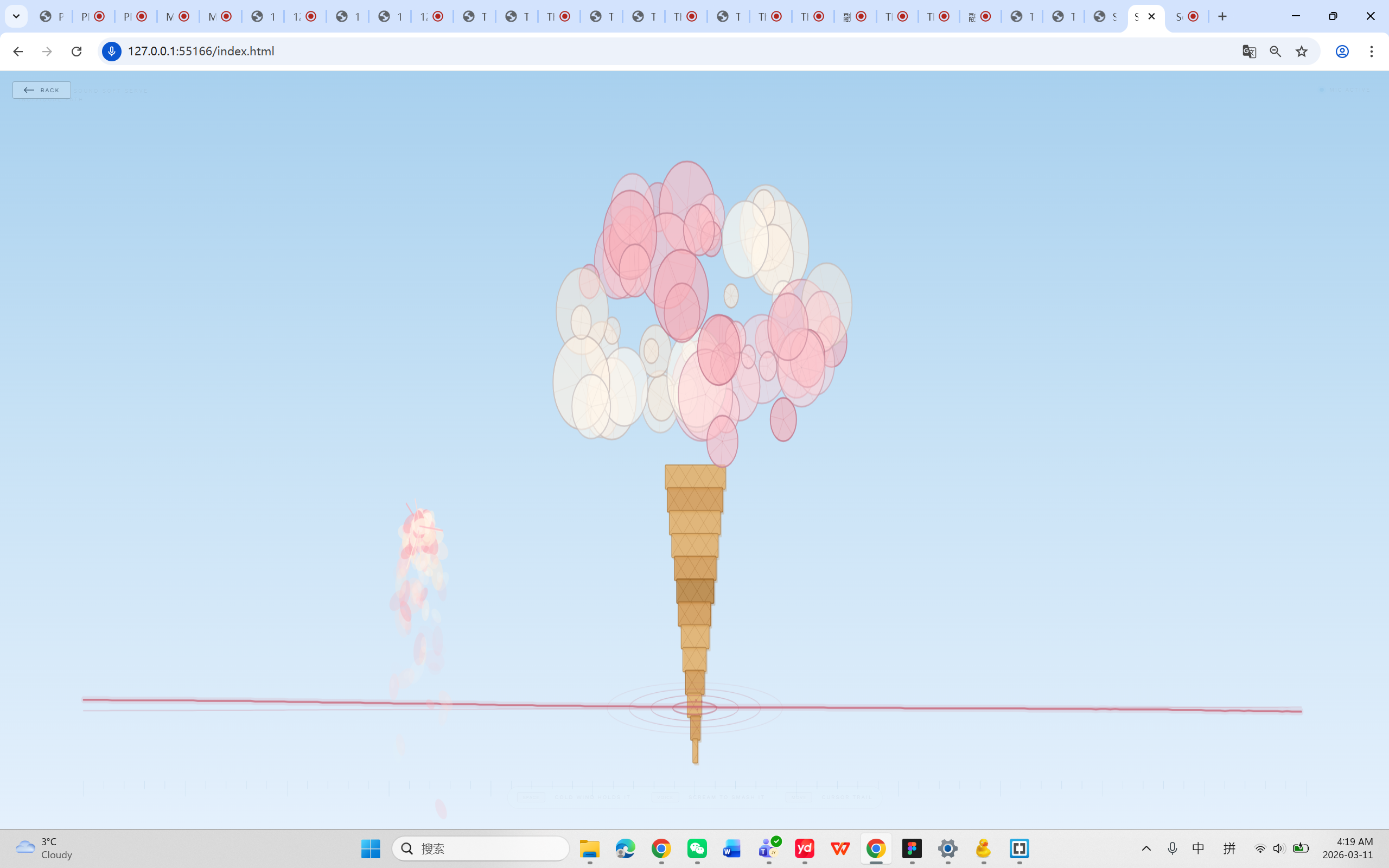
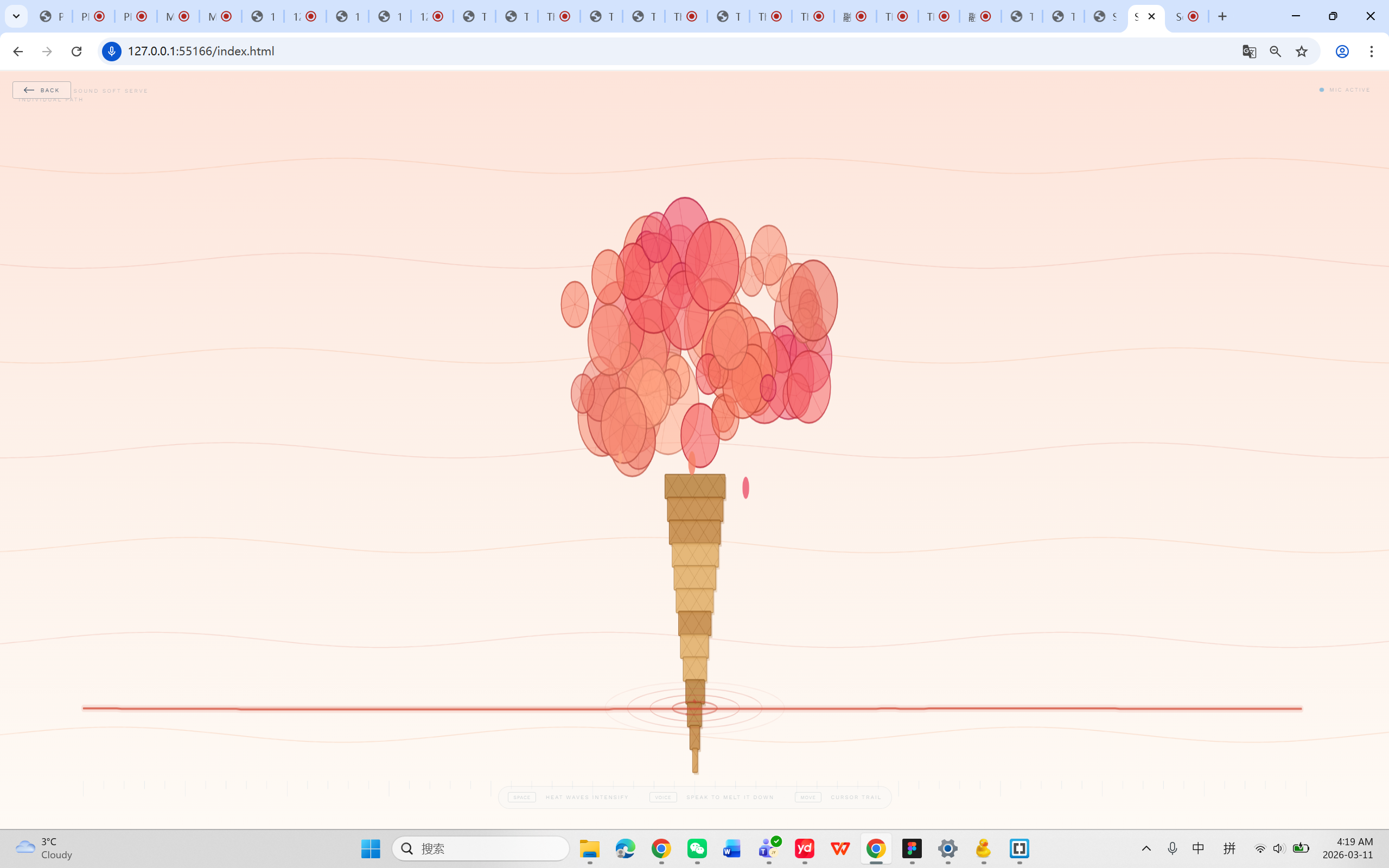
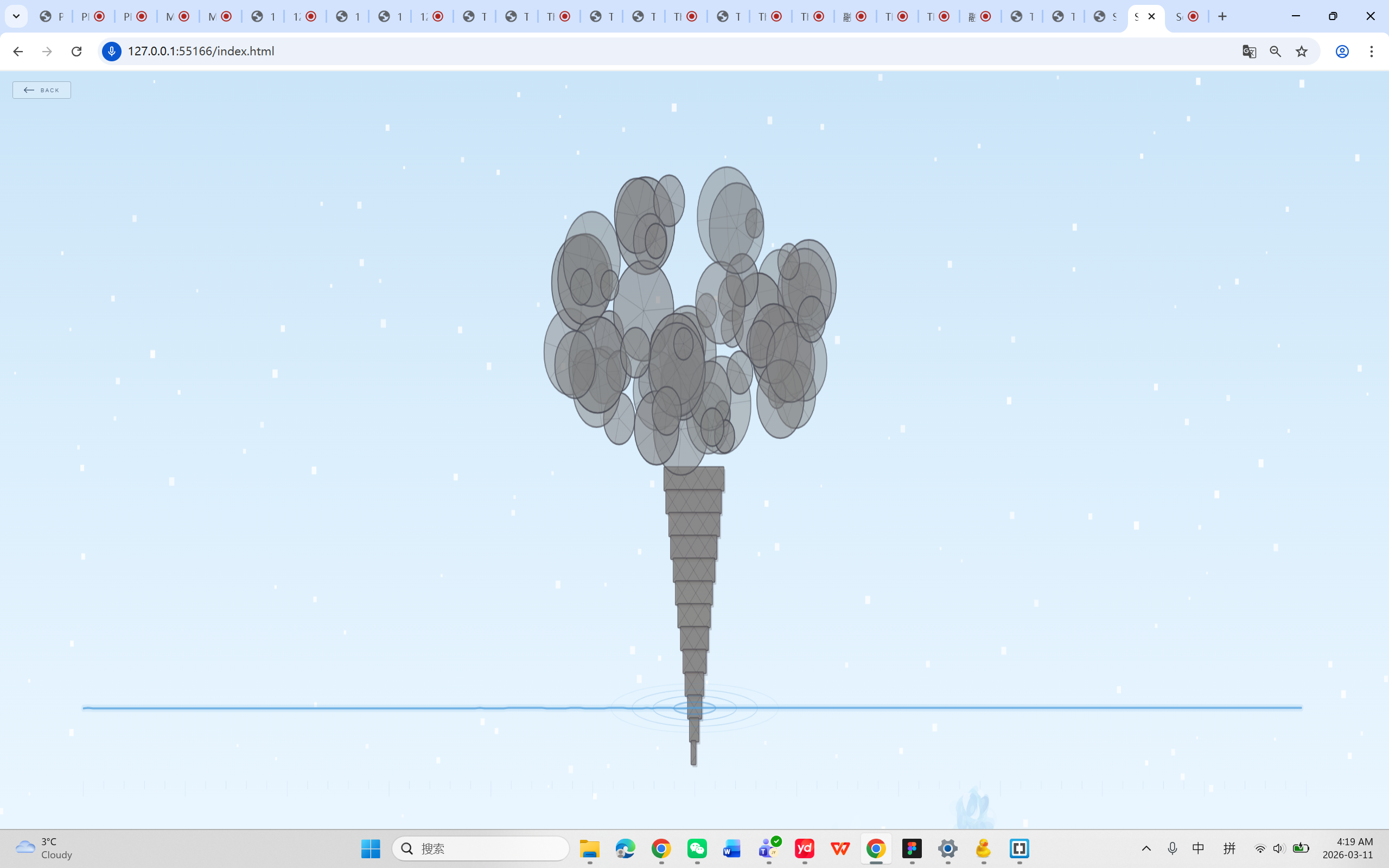
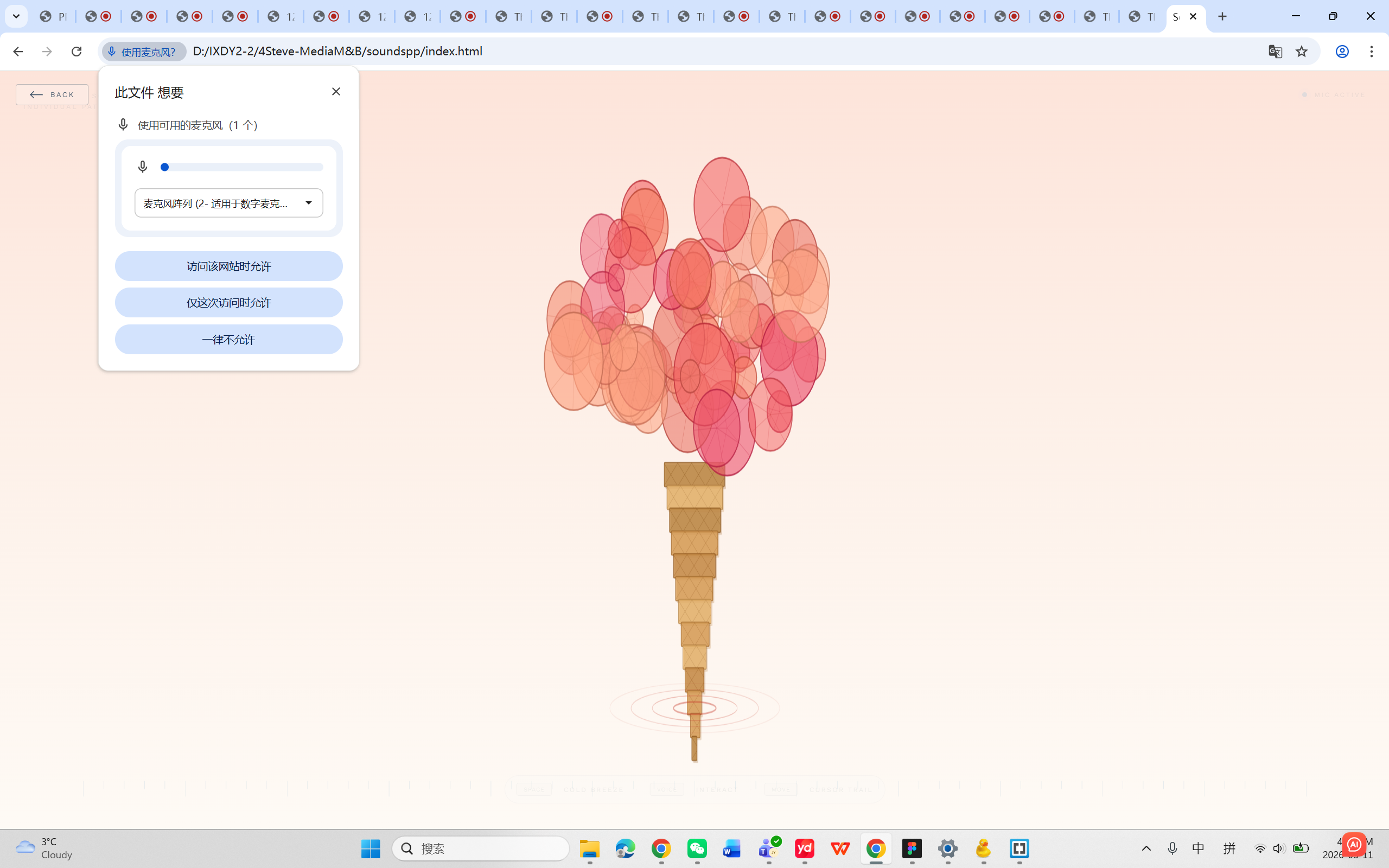
corresponds to a different physical state change. In Smash,
loud sound explodes the ice cream scoop outward in a radial burst,
with spring physics that snap the form back to stillness the moment
the voice falls silent; the interaction is immediate, percussive, and
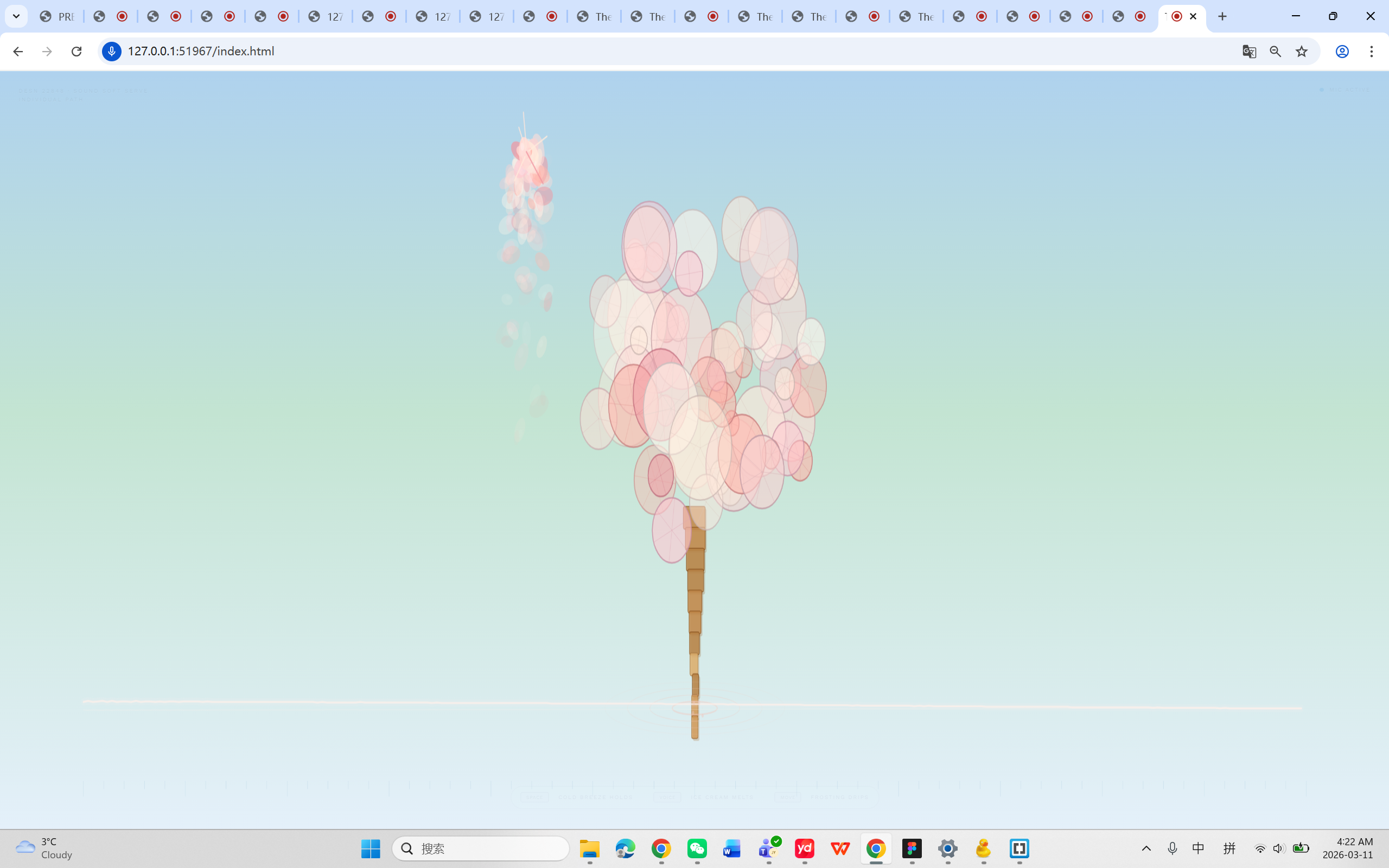
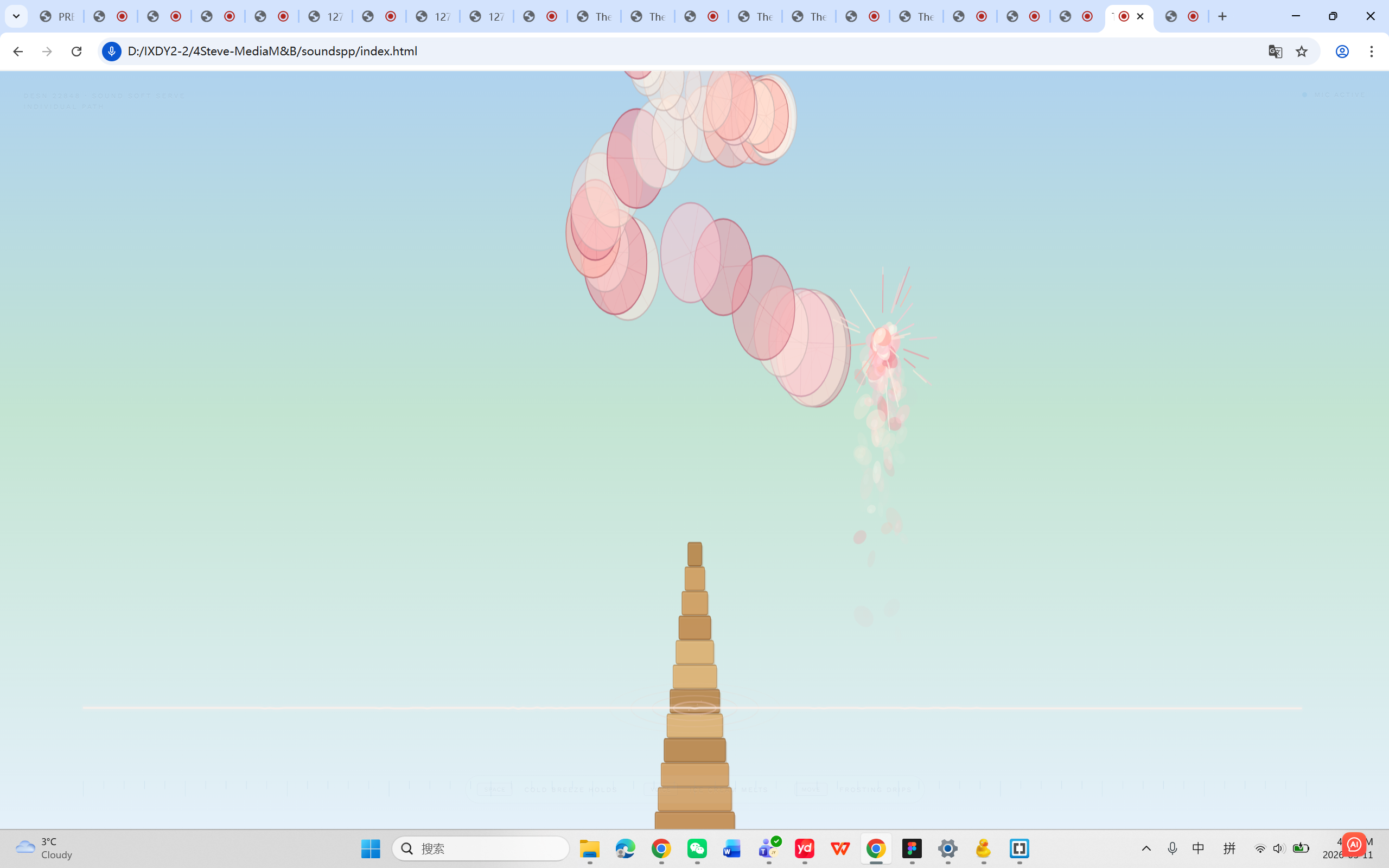
deeply satisfying. In Melt, sustained speaking accumulates
a downward droop — a cascading flow that only reverses through
the deliberate counter-force of the space bar — making the
relationship between sound and consequence slow, cumulative, and
surprisingly tender. In Freeze, the logic inverts entirely: it
is silence, not sound, that produces visual change, draining colour
from the scoop into a grey stillness that only the user's voice can
restore — a mode whose key discovery was simply that absence can
be just as forceful a design parameter as presence.
What unifies all three modes is a set of four sound dimensions
drawn from lecture content: the physiological (the body itself is
the input device), the cognitive (every visual response carries a
clear causal logic), the emotional (ice cream as a comfort object
placed under deliberate stress), and the behavioural (each mode
shapes a distinct and non-interchangeable interaction loop through
its unique physics table). Voice here is not a trigger — it is a
force; and each mode is only a different physical relationship
between the user's breath and the material state of something
extraordinarily ordinary.
Portfolio